Blog3 min read509 words
How Many Nigerian Private Universities Restrict Students from Participating in Real-World Activities

In Nigeria, a significant proportion of tertiary institutions are privately owned by individuals, NGOs, foundations, corporations, and religious organizations. Churches, in particular, remain major stakeholders in the ownership and administration of tertiary institutions across the country.
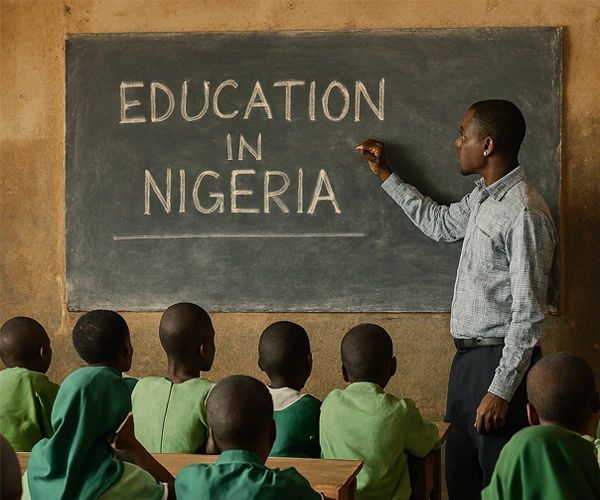
This study is premised on the concern that many students who pass through some private universities often graduate with limited exposure to real-world engagement and practical social interaction. As products of highly controlled institutional environments, many students are not sufficiently exposed to programs and activities capable of influencing cognitive, social, and leadership development beyond the classroom.
Unlike many federal universities, private universities rarely organize extracurricular activities that deeply engage students in practical learning, civic participation, leadership training, or community development. Much of the focus remains heavily centered on academic performance. While academic excellence is important, it is not, in itself, sufficient to produce students who are fully prepared to make meaningful societal impact.
Within the Nigerian educational system, it is increasingly common to encounter academically outstanding students, and first-class graduates, who possess limited practical understanding of communication, leadership, financial literacy, negotiation, volunteering, or broader composite life skills required in modern society.
This observation does not suggest that private universities are incapable of producing exceptional graduates. Rather, it emphasizes the need for universities to consciously create environments that expose students to volunteering opportunities, financial literacy programs, skill acquisition initiatives, internships, leadership development, and other activities specifically designed to promote holistic growth.
In the present age, formal education alone is no longer sufficient.
Although private universities possess the legal authority to make internal administrative arrangements through their respective senates and governing councils, institutions seeking long-term credibility and formidable public representation must intentionally groom students beyond nominal academic education.

One of the advantages of the digital age is that access to information has become significantly easier and less expensive. Consequently, exposing students to knowledge, opportunities, and developmental resources is no longer an overly burdensome endeavor for institutions.
To address these concerns, the following recommendations are proposed:
Private universities should invest in reliable internet connectivity programs accessible to all students. At Joseph Ayo Babalola University (JABU), for example, the Google for Education initiative has proven to be an efficient and reliable source of digital connectivity. It is equally important that such programs remain affordable and accessible to students.
The National Universities Commission should consider mandating private universities to organize periodic developmental programs featuring competent speakers, while also creating mechanisms to ensure proper execution and measurable impact.
Universities should consciously create opportunities that encourage student growth beyond the classroom environment.
Universities should incorporate volunteering programs, internship opportunities, leadership engagement, and practical skill acquisition into their educational framework in order to promote an all-encompassing student development system.
By Oluwaferanmi Adebayo
Founder and CEO, ThinkAfrica